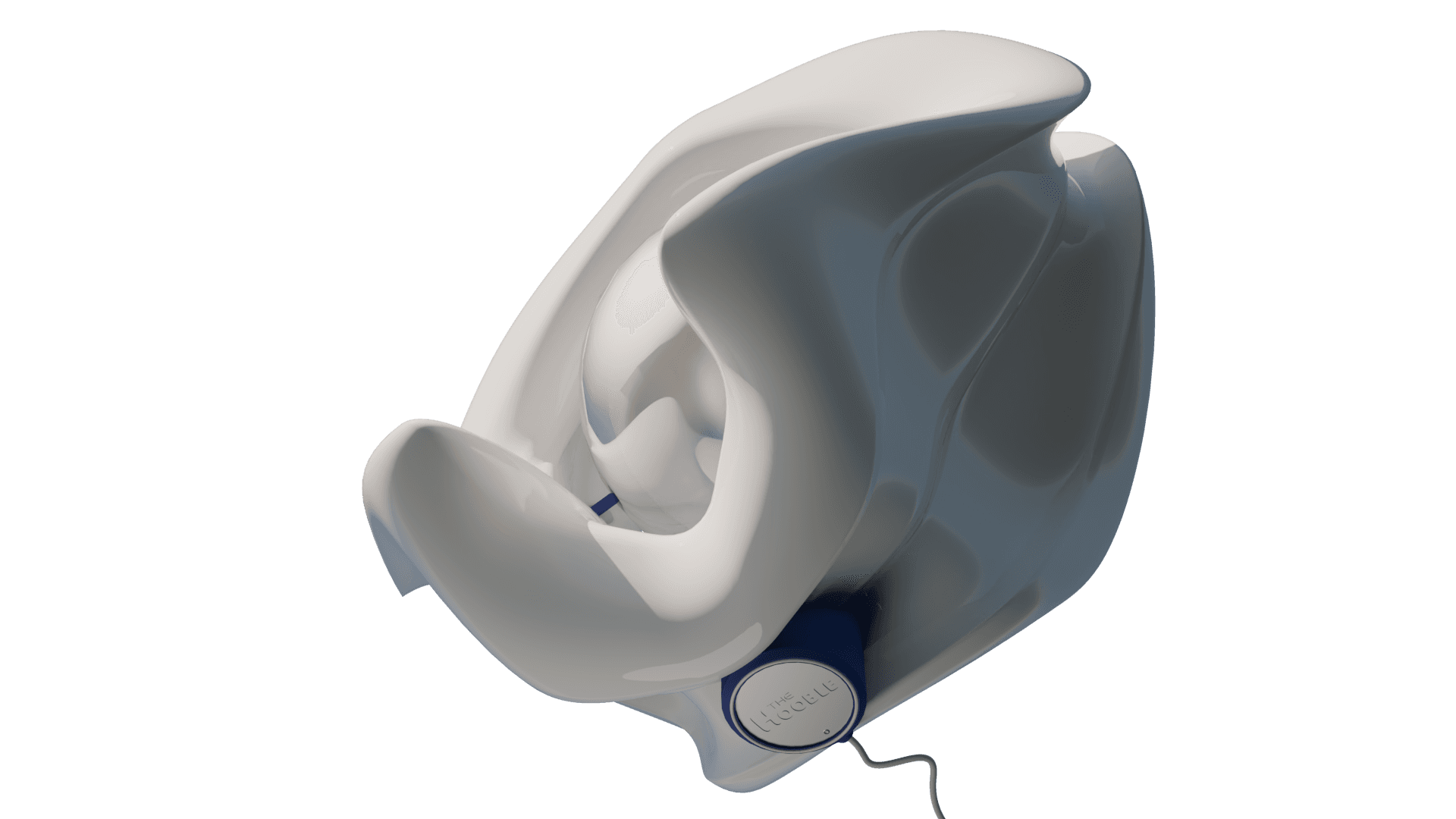
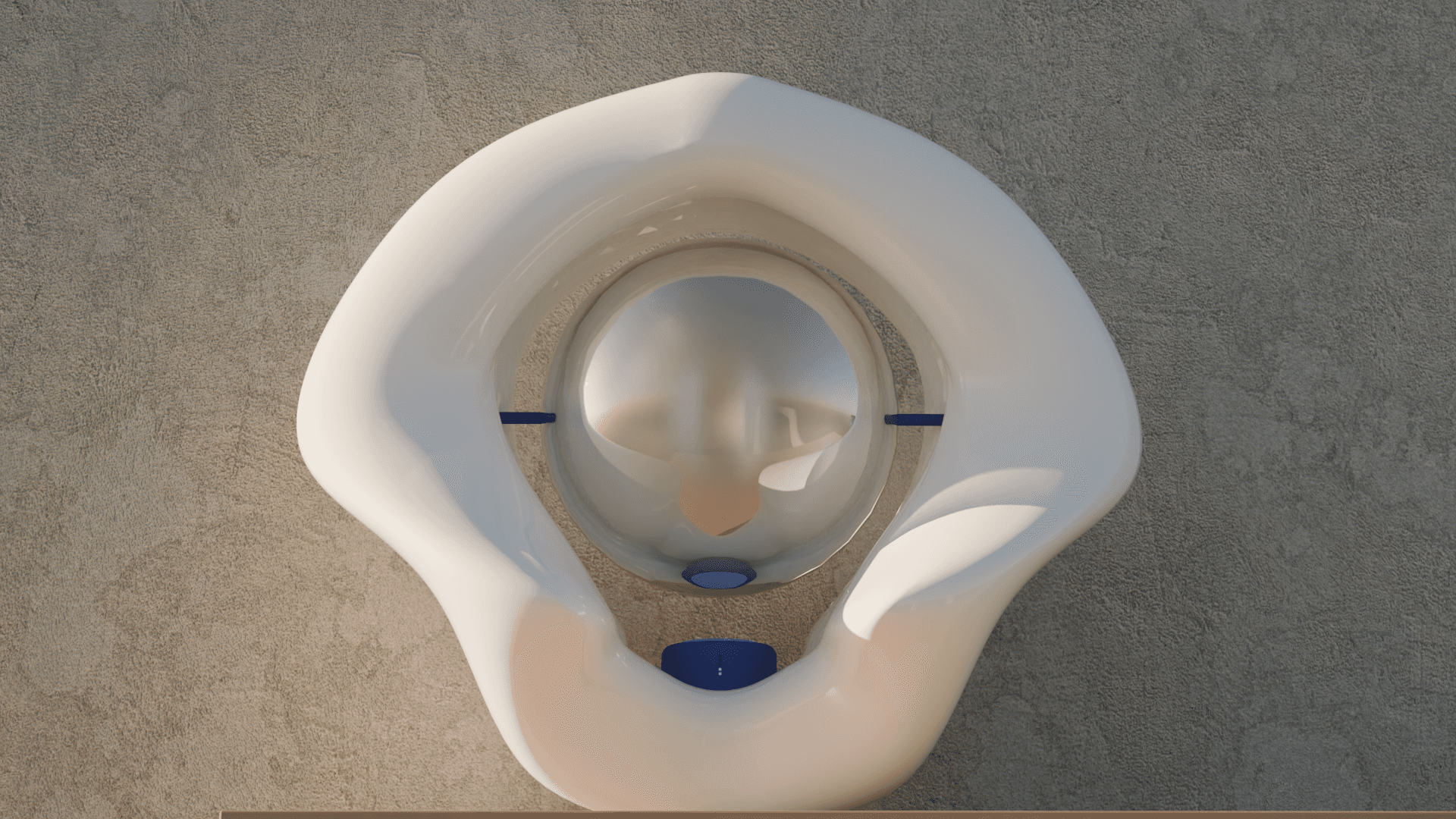
A lamp that feels like the future imagined from the past. Hooble started as a morphology exercise: develop a complex form first, then find its function. The shape came from studying organic curves and how they catch and redirect light. The result is a table lamp that hides its light source inside and only reveals a warm, indirect glow through its openings. The aesthetic draws from a specific place: the way the 1970s imagined the objects of tomorrow.
A form from every angle.
A new way to dialogue with a lamp.
The morphology course asked us to develop a complex form and then find a product that could live inside it. I worked with curves that fold into themselves, creating pockets where light can be trapped and redirected. The form is not a container for a bulb. It is the lighting system itself: where it opens, light escapes. Where it closes, shadow builds. The interaction is not a switch. It is the relationship between your eye, the opening, and the glow inside.
Form exploration
Early models testing how curves fold into themselves, finding where light could be trapped.
3D print
First physical prototype. Surface refinement through sanding and primer cycles.
Assembly
Testing proportions and the relationship between the shell and the light source inside.
Surface finish
Final sanding passes. The texture needs to feel warm to the touch, not clinical.
Finished prototype
The piece ready for photography. The glow comes from within.